
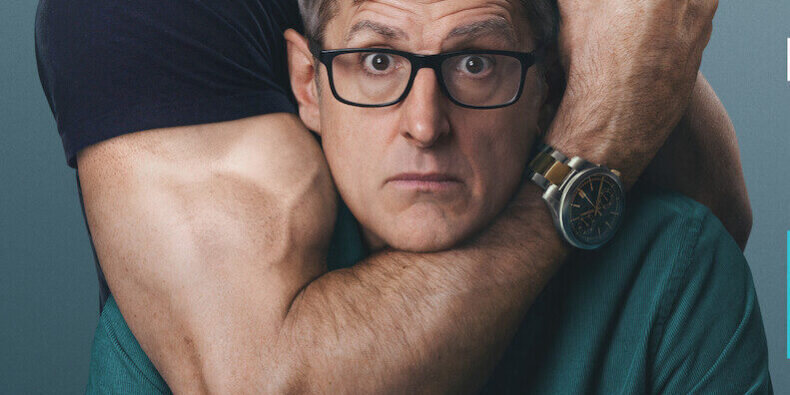
Louis Theroux: Inside the Manosphere – on identity, dominance, and the cost to women
By Rebecca Tregaskis | HER Centre
Louis Theroux’s new documentary Inside the Manosphere dropped on Netflix last week. I have watched it twice now: once with my flatmates (both girls) and once by myself. My first watch was on the same day a young girl in Norwich was stabbed outside her school by a 15-year-old boy.
Theroux delves into a part of social media that has been growing rapidly for a number of years – known as the ‘manosphere.’ It is often characterised as content that discusses the belief that men have become ‘wage slaves’ to a society which prioritises feminist ideology. While much of this content is based on gym culture, success, and masculinity, the ‘manosphere’ often spills into misogynistic content and harmful gender roles.
Manosphere content rejects society, claiming that it is oppressive to men. It offers an alternative space where men can ‘beat the system.’ Content is pushed out that persuades men and boys they can be successful, wealthy, and romantically appealing if they adopt the mindset of the male ‘manosphere’ influencers. Many of these creators also sell courses which promise to teach their audience how to become successful. The manosphere offers identity to young boys through ideas of dominance. This content is designed to pull in young men and isolate them from the rest of society.
At the top of this internet phenomenon are men who accumulate millions of views and followers – these are the figures primarily featured in Theroux’s documentary. Theroux follows influencers such as Harrison Sullivan (‘HSTikkyTokky’), Myron Gaines, Nicolas Kenn De Balinthazy (‘Sneako’), and Justin Waller. Throughout their interviews, these men often perpetuate racist, homophobic, misogynistic, and antisemitic views. When Harrison Sullivan was questioned about his antisemitic views, his response was that it was ‘click-farming,’ a concept where clips are made purely with the intention of gaining clicks and going viral. The men creating manosphere content prioritise views and clicks, which generate money.
The documentary is more of a reveal than a deep dive. It does not fully explore the consequences of these ideas, but it does shine a mainstream spotlight on what is happening online. Theroux allows the story to tell itself rather than dissecting it. In one of the first interviews, Theroux visits HSTikkyTokky in Marbella, where a woman in his home is referred to as a ‘dishwasher.’ The woman laughs this off. Throughout the documentary, different ideas about women are shared, including a disdain for women with high ‘body counts,’ women who create content for ‘OnlyFans,’ and monogamous relationships. All of these ideas are grounded in the belief that men should dominate women. Many of the men interviewed go so far as to say that dominance is what most women want.
In another part of the documentary, Theroux takes part in a podcast where female influencers are invited on. Throughout the podcast, it becomes clear that the women are there for the purpose of humiliation. Live comments are read out during the session, many of which use derogatory language such as ‘slag’ and ‘whore.’ The podcast also shares a TikTok video that claims a woman’s ‘body count’ matters because male DNA stays in her body and can influence her future children. To be clear, this is entirely untrue.
The documentary also highlights how young men and boys are the target audience. As one participant summarises, these men believe their content is teaching ‘boys how to be boys.’ Almost 70% of boys aged 11–14 have seen misogynistic content online, highlighting how accessible and widespread this material is. In other clips, which I found truly terrifying, fans come barrelling over to influencers during street interviews. These fans are mainly teenage boys, some of whom look as young as 12.
Many vulnerable boys and young men seem to have found a sense of belonging among these content creators. Over 70% of teachers have reported a rise in sexist language, and 74% of boys and 92% of girls report that sexist name-calling is frequent in social circles. Additionally, 31% of Gen Z men believe wives should ‘obey’ their husbands, which is higher than among older generations. While the documentary does not explore why this content appeals to young boys, it serves as a good starting point for those who are unaware of this online space. It acts as a conversation starter, which is particularly important for parents who may be unaware of this digital world.
However, where Theroux falls short is in addressing the consequences of the manosphere. While young men are the target of this subculture, it is women who bear the cost. Misogyny is on the rise, with a 37% increase in violence against women and girls between 2018 and 2023. This rise is also heavily linked to misogyny online. The internet does not stay on the internet; it bleeds into everyday life. Police-recorded rape and sexual assault offences increased by 264% between 2009–10 and 2023–24. Women and girls are bearing the consequences of this online subculture. However, police data is believed to show only a small proportion of the problem, as only 24% of domestic violence cases are reported. Young boys are being radicalised to see women as the enemy.
Inside the Manosphere acts as a lens, and it is up to all of us to take action. We are a step away from falling back into mainstream patriarchal ideals. The newest generation deserves to be protected from both radicalisation and violence.
The Her Centre can offer support for you or your loved ones. For more information on our services, please contact us on 020 3260 7772 or info@hercentre.org